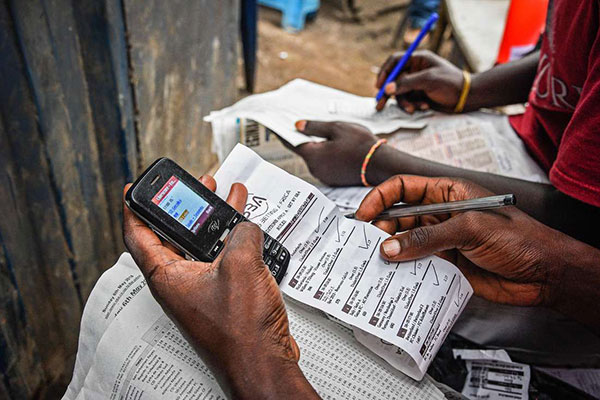
The Dusty Roads Where Digital Gambling Meets Reality
In the remote villages of Turkana County, where the nearest bank branch might be a three-hour matatu ride away, a quiet revolution is reshaping how Kenyans engage with digital gambling. The choice between SMS betting and mobile app betting isn’t just about technology preferences—it’s about infrastructure, literacy, and the fundamental economics of rural connectivity.
Kenya’s rural betting landscape presents a fascinating paradox: while urban centers like Nairobi boast 4G coverage rates exceeding 87%, rural areas still grapple with inconsistent data connectivity. Yet gambling participation rates in these regions have surged by 340% since 2019, according to the Kenya National Bureau of Statistics. This growth has been driven primarily by two competing technologies that couldn’t be more different in their approach.
The story begins in 2018 when the Communications Authority of Kenya reported that SMS penetration in rural areas reached 94%, while smartphone adoption languished at just 23%. Fast forward to 2026, and we’re witnessing a technological leapfrog that’s redefining rural gambling habits in unexpected ways.
When 2G Networks Carry Million-Shilling Dreams
SMS betting emerged as the unlikely champion of rural Kenya’s gambling boom, not through superior marketing, but through sheer necessity. In villages where electricity arrives sporadically and data bundles cost more than a day’s wages, the humble text message became a lifeline to betting opportunities.
“SMS betting democratized gambling access in ways we never anticipated,” explains Dr. Margaret Wanjiku, a telecommunications researcher at the University of Nairobi who has studied rural connectivity patterns for over a decade. “A farmer in Marsabit can place a bet on Manchester United using a basic Nokia phone that costs 2,000 shillings, while his urban counterpart needs a smartphone worth 15,000 shillings minimum.”
The numbers tell a compelling story. SMS betting transactions in rural Kenya processed 2.8 billion shillings in 2025, representing 34% of all rural gambling activity. More striking is the user retention rate: SMS bettors show 73% higher long-term engagement compared to app users in areas with poor connectivity. This isn’t about preference—it’s about reliability.
Consider the typical SMS betting workflow: a punter sends “BET EPL 1X 100” to shortcode 29090, receives instant confirmation, and gets results delivered automatically. No app crashes, no data bundle depletion, no smartphone battery anxiety. For many rural bettors, platforms offering comprehensive SMS services, including established operators like 22Bet login, have become essential tools for accessing international betting markets without the technological barriers that apps can present.
The Smartphone Surge: Apps Fight Back
Mobile betting apps didn’t concede rural Kenya without a fight. The smartphone penetration rate in rural areas jumped from 23% to 67% between 2022 and 2026, driven partly by Chinese manufacturers flooding the market with sub-10,000 shilling Android devices. Suddenly, the app versus SMS debate became less about capability and more about user experience.
Apps offer undeniable advantages: live streaming, in-play betting, detailed statistics, and crucially for slots enthusiasts, access to sophisticated games with megaways mechanics and bonus buy features that simply can’t be replicated through text messages. The visual appeal of spinning reels and cascading symbols creates an engagement level that “SPIN SLOT1 50” via SMS can never match.
Rural data costs, however, remain the app ecosystem’s Achilles heel. A typical betting app consumes 15-25MB per hour of active use, translating to roughly 200 shillings in data costs for a weekend of betting. Compare this to SMS betting’s fixed cost of 5 shillings per transaction, and the economic equation becomes stark.
Infrastructure Reality Check: When Technology Meets Geography
The infrastructure divide between SMS and app betting reveals itself most clearly during Kenya’s rainy seasons. When flooding disrupts 3G towers in Tana River County or sandstorms interfere with data signals in Garissa, SMS services continue operating on the more robust 2G network infrastructure.
Safaricom’s network coverage maps show that while 2G coverage reaches 96% of Kenya’s landmass, 4G coverage drops to 51% in rural areas. This gap explains why SMS betting maintains its stronghold despite the smartphone revolution. It’s not nostalgia driving adoption—it’s pragmatism.
The reliability factor extends beyond network coverage to device durability. Rural environments are harsh on electronics. Dust, heat, and occasional drops onto rocky ground favor the indestructible Nokia 3310 over the fragile smartphone screen. SMS betting aligns perfectly with this hardware reality.
The Economics of Rural Gambling: Shillings and Sense
Rural Kenya’s betting economics operate on razor-thin margins that urban operators often misunderstand. The average rural bettor stakes 47 shillings per transaction, compared to 156 shillings for urban app users. These smaller stakes make transaction costs critically important.
SMS betting’s flat-rate pricing model suits this demographic perfectly. Whether betting 20 shillings on a local football match or 200 shillings on the Premier League, the SMS cost remains constant. Apps, conversely, impose hidden costs through data consumption that can quickly exceed the stake amount for small bets.
“Rural bettors are incredibly cost-conscious,” notes James Kiprotich, a former betting operator executive who now consults on rural market penetration. “They calculate not just potential winnings, but the total cost of participation. SMS betting’s transparency in this regard has been its secret weapon.”
The payment integration also favors SMS systems. M-Pesa, Kenya’s dominant mobile money platform, processes SMS betting transactions seamlessly through USSD codes that work on any phone. App-based betting requires smartphone-specific M-Pesa apps or mobile banking applications that many rural users find intimidating.
Digital Literacy: The Invisible Barrier
Kenya’s rural digital literacy rates paint a complex picture that explains betting platform preferences. While 78% of rural adults can send and receive SMS messages, only 34% feel comfortable navigating smartphone applications beyond basic calling and texting functions.
This literacy gap isn’t about intelligence—it’s about exposure and training opportunities. Urban Kenya benefits from internet cafes, tech-savvy youth, and informal digital education networks. Rural areas lack these support systems, making SMS betting’s text-based simplicity more accessible than app interfaces designed for smartphone natives.
The generational divide is particularly pronounced. Rural bettors over 35 overwhelmingly prefer SMS betting (89%), while those under 25 split more evenly between platforms (54% apps, 46% SMS). This suggests a gradual shift toward app adoption, but the timeline extends over decades, not years.
When Slots Meet Safari: The Gaming Experience Divide
The gaming experience gap between SMS and app betting becomes most apparent in slot gaming, where visual elements drive engagement. Rural Kenya’s growing interest in online slots—up 187% since 2024—highlights this platform divide most clearly.
SMS slot gaming reduces sophisticated reel mechanics to basic text commands: “SPIN BUFFALO 50” might trigger a Buffalo-themed slot, but players receive only text results: “WIN 150 – 3 BUFFALOS.” The excitement of cascading reels, expanding wilds, and bonus animations disappears entirely.
App-based slots, meanwhile, deliver full audiovisual experiences that rival casino gaming. Megaways slots with their 117,649 ways to win, bonus buy features allowing instant access to free spins, and progressive jackpots create engagement levels that SMS simply cannot match. Yet in areas with unreliable connectivity, these sophisticated features become frustrations when apps crash mid-spin or fail to load bonus rounds.
The Hybrid Future: Convergence on the Horizon
Kenya’s rural betting future likely lies not in choosing between SMS and apps, but in hybrid solutions that leverage both technologies’ strengths. Progressive operators are developing “lite” apps that function offline, syncing when connectivity allows, while maintaining robust SMS backup systems.
The government’s ongoing rural electrification program, which aims to reach 95% coverage by 2028, will gradually eliminate one barrier to smartphone adoption. Similarly, Starlink’s satellite internet expansion into rural Kenya promises to democratize high-speed connectivity, potentially shifting the balance toward app-based betting.
However, cultural and economic factors suggest SMS betting will retain significant market share indefinitely. The simplicity, reliability, and cost-effectiveness that made SMS betting dominant in rural Kenya aren’t temporary advantages—they’re fundamental features that serve real user needs.
As Kenya’s rural gambling market continues evolving, the SMS versus app debate reveals deeper truths about technology adoption, digital inclusion, and the persistent urban-rural divide. The winner isn’t the most sophisticated technology—it’s the one that best serves users where they are, with what they have, at prices they can afford.