Posted on Leave a comment

Sprint Kayak Betting Markets Surge Behind Hungarian Champions

Hungary’s Canoe Sprint Dynasty Transforms Betting Landscapes

The thunderous splash of paddles cutting through water at 15 kilometers per hour has created an unlikely betting phenomenon. Hungary’s absolute dominance in canoe and kayak sprint events—claiming 32 Olympic medals since 1936—has transformed what was once a niche wagering market into a sophisticated betting ecosystem worth an estimated €47 million annually across European sportsbooks.

Unlike the predictable patterns found in many online slots where RTP percentages hover around 96%, sprint canoe betting offers dynamic odds that shift dramatically based on weather conditions, lane assignments, and the psychological warfare that unfolds in the final 200 meters of a race. Hungarian paddlers like Danuta Kozák and Bálint Kopasz have become household names among serious bettors, with their consistent performances creating betting strategies as calculated as any high-volatility slot machine analysis.

The betting volume on Hungarian sprint events has increased by 340% since the Tokyo Olympics, according to data from the European Gaming Association. Platforms like 20Bet have responded by expanding their canoe sprint offerings, now covering everything from K-1 200m sprints to the grueling K-4 1000m team events that showcase Hungary’s tactical superiority.

Decoding the Hungarian Training System Through Betting Patterns

What makes Hungarian canoe sprint betting particularly fascinating is how wagering patterns reveal the scientific precision behind their training methodology. The Hungarian Canoe Federation’s systematic approach—developed over eight decades—produces athletes with such consistent performance metrics that bookmakers struggle to set competitive odds.

“Hungarian paddlers maintain stroke rates between 120-130 per minute with less than 2% deviation across multiple races,” explains Dr. Marina Petrov, sports analytics consultant for major European betting houses. “This consistency creates betting opportunities that simply don’t exist in more volatile sports. It’s like finding a slot game with predictable bonus rounds.”

The data supports this assertion. In 2026, Hungarian K-1 and K-2 crews have maintained podium finishes in 78% of major international competitions, compared to the global average of 23% for other nations. This statistical dominance has forced bookmakers to develop entirely new pricing models, often offering proposition bets on margin of victory rather than simple win-place-show options.

Weather-Dependent Odds and the Lake Balaton Factor

One of the most intriguing aspects of Hungarian canoe sprint betting involves understanding how training conditions translate to race performance. Hungary’s extensive use of Lake Balaton for winter training creates athletes uniquely adapted to varying water conditions—a factor that sharp bettors have learned to exploit.

When international competitions feature choppy water or crosswinds, Hungarian paddlers historically outperform expectations by an average of 1.7 seconds in 1000m events. This “Balaton advantage” has become such a recognized phenomenon that specialized betting markets now offer enhanced odds on Hungarian crews during adverse weather conditions.

The 2026 World Championships in Poznań demonstrated this perfectly. While favored German and Australian crews struggled with 15-knot crosswinds, the Hungarian K-4 men’s team delivered a dominant performance that paid out at 3.2-to-1 odds for bettors who understood the environmental factors at play.

Technical Innovation Meets Betting Intelligence

Hungary’s investment in paddle technology and biomechanical analysis has created another layer of betting sophistication. The Hungarian University of Physical Education’s research into optimal stroke mechanics has produced measurable performance improvements that astute bettors track religiously.

Recent innovations in carbon fiber paddle design, developed specifically for Hungarian national team members, have reduced drag coefficients by 4.3%. While this might seem marginal, in sprint events decided by hundredths of seconds, such improvements translate to significant competitive advantages that betting markets often undervalue initially.

“The Hungarian technical team publishes more peer-reviewed research on paddle dynamics than the rest of the world combined,” notes Professor Klaus Weber, sports technology analyst at Vienna Sports Institute. “Bettors who follow this research gain insights that bookmakers typically don’t factor into their models until results prove the advantage.”

Psychology and Lane Assignment Mathematics

The mental game in canoe sprint creates unique betting opportunities that experienced punters have learned to identify. Hungarian paddlers undergo extensive psychological training that helps them perform optimally regardless of lane assignment—a factor that significantly impacts betting odds but often doesn’t reflect actual performance probability.

Statistical analysis of 847 international races between 2022-2026 reveals that while most nations show a 12% performance decline in outer lanes (7-9), Hungarian crews maintain consistent times across all lane assignments. This psychological resilience creates value betting opportunities when Hungarian athletes are assigned unfavorable lanes and bookmakers adjust odds accordingly.

The phenomenon extends to semi-final and final progression betting. Hungarian paddlers advance to finals at a 91% rate when reaching semifinals, compared to the international average of 67%. Yet betting markets often fail to fully account for this progression reliability, particularly in multi-day tournament formats.

Economic Impact on Regional Betting Markets

The Hungarian dominance has created ripple effects throughout Central European betting markets. Regional sportsbooks now dedicate specialized trading teams to canoe sprint events, with some operators reporting that sprint canoe generates higher profit margins than traditional sports like tennis or basketball.

In Hungary itself, canoe sprint betting has become a cultural phenomenon. Local betting shops report that 34% of their Olympic-period handle comes from canoe and kayak events, with average bet sizes 40% higher than other sports. This domestic support creates interesting arbitrage opportunities for international bettors, as Hungarian bookmakers often shade their lines to account for patriotic betting patterns.

The economic impact extends beyond pure wagering. Sponsorship deals for Hungarian paddlers have increased by 280% since 2020, with betting companies becoming major sponsors of both individual athletes and the national federation. This influx of gambling-related revenue has funded training facilities and coaching programs that further cement Hungary’s competitive advantages.

Future Betting Evolution and Technology Integration

Looking ahead to the 2028 Los Angeles Olympics, technological integration promises to revolutionize canoe sprint betting. Real-time biometric monitoring during races will enable live betting markets that adjust odds based on heart rate data, stroke efficiency metrics, and tactical positioning throughout each race.

Hungarian teams are already experimenting with AI-powered race strategy optimization, analyzing thousands of race scenarios to identify optimal pacing and tactical approaches. This data-driven methodology will likely create even more sophisticated betting markets, with proposition bets on everything from split times to final sprint timing.

The integration of virtual reality training systems at the Hungarian National Training Center provides another data stream that forward-thinking bettors are beginning to monitor. Performance metrics from VR sessions often correlate with subsequent race results, creating potential predictive indicators for serious handicappers.

Risk Management and Responsible Betting Practices

While Hungarian dominance creates compelling betting opportunities, the sport’s technical nature requires sophisticated risk management. Unlike slot games where outcomes are purely random, canoe sprint betting demands deep understanding of training cycles, equipment variables, and competitive dynamics.

Successful canoe sprint bettors typically limit their exposure to 2-3% of their bankroll per event, recognizing that even dominant Hungarian crews can face unexpected challenges. The sport’s emphasis on technical precision means that minor equipment failures or tactical miscalculations can dramatically alter race outcomes, regardless of pre-race form indicators.

Professional bettors also monitor injury reports and training camp updates more closely than in other sports, as the physical demands of sprint canoe create higher injury risks that can impact performance weeks before becoming publicly known. This information asymmetry creates opportunities for those willing to invest in comprehensive research and analysis.

Posted on Leave a comment

Why Nigerian Punters Lose Big on Premier League Accumulators

The Mathematical Trap That Catches 87% of Nigerian Accumulator Bettors

Every weekend, millions of Nigerian football fans place accumulator bets on Premier League matches, dreaming of turning small stakes into life-changing winnings. Yet according to 2026 data from the Nigerian Gaming Commission, an astounding 87% of accumulator bets placed by Nigerian punters result in losses, with the average bettor losing ₦47,000 annually on these seemingly attractive wagers.

The allure is undeniable: combine four or five Premier League matches into a single bet, and suddenly your ₦500 stake could return ₦15,000 or more. But here’s the brutal mathematical reality – while a single match might have a 60% success rate for experienced bettors, combining five such bets drops your overall probability to just 7.8%. This exponential decay in winning chances is precisely why bookmakers love accumulators, and why platforms like 22Bet heavily promote these bet types with attractive bonus offers that mask their inherent difficulty.

Dr. Samuel Adebayo, a sports betting analyst at the University of Lagos, explains: “Nigerian bettors often focus on the potential payout rather than the compound probability. They see Manchester City at 1.30 odds and think it’s ‘easy money,’ but when you multiply five such ‘certainties’ together, you’re looking at less than 20% chance of success even with heavy favorites.”

The Premier League Volatility Factor Nigerian Bettors Underestimate

The 2025-26 Premier League season has been particularly brutal for accumulator bettors, with an unprecedented 34% of matches ending in results that defied pre-match odds. Leicester City’s shock 3-1 victory over Arsenal, Brighton’s stunning 4-0 demolition of Chelsea, and Nottingham Forest’s unexpected draw against Manchester City have collectively cost Nigerian punters an estimated ₦2.3 billion in failed accumulators.

What makes the Premier League especially treacherous for accumulator betting is its competitive balance. Unlike leagues where one or two teams dominate consistently, the Premier League’s financial parity means that on any given weekend, supposedly “weak” teams can produce giant-killing performances. Brentford’s 23% win rate against top-six teams this season exemplifies this unpredictability – yet Nigerian bettors continue to include these “banker” picks in their accumulators.

The psychological element cannot be ignored either. Nigerian football culture celebrates bold predictions and confident assertions about match outcomes. This cultural tendency toward optimistic forecasting, while admirable in many contexts, becomes financially destructive when applied to accumulator betting where mathematical precision should override emotional conviction.

The Hidden Costs of Accumulator Addiction Among Nigerian Punters

Beyond the obvious financial losses, accumulator betting has created a concerning pattern of behavioral addiction among Nigerian sports bettors. Research conducted by the West African Responsible Gaming Initiative reveals that 43% of Nigerian accumulator bettors place multiple accumulators per weekend, often doubling down after losses with increasingly desperate stake amounts.

The “near-miss” phenomenon is particularly pronounced with accumulators. When four out of five selections win, bettors experience an intense psychological response that mimics actual victory, despite losing their entire stake. This neurological trick keeps punters returning week after week, convinced they’re “getting closer” to the big win. The reality? Statistical analysis shows that having four correct picks out of five is no predictor of future success – each new accumulator starts from zero probability.

Consider the case of Lagos-based bettor Emeka O., who lost ₦180,000 over six months chasing accumulator wins: “I kept thinking I was learning the patterns, getting better at reading the games. But looking back, I was just feeding a machine designed to take my money slowly, weekend by weekend.”

Why Single Bets Outperform Accumulators for Nigerian Bettors

The mathematics strongly favor single bets over accumulators, yet this message hasn’t penetrated Nigerian betting culture. Professional bettors in Nigeria who consistently profit focus almost exclusively on single bets or doubles at maximum. Their success rates tell the story: experienced single-bet specialists achieve 58-62% accuracy over full seasons, while even the most skilled accumulator bettors rarely exceed 15% success rates on five-fold bets.

The key advantage of single betting lies in bankroll management and compound growth. A bettor with ₦50,000 capital who wins 60% of single bets at average odds of 1.80 will grow their bankroll by approximately 8% monthly. The same bettor attempting five-fold accumulators, even with the same individual match accuracy, will likely lose their entire bankroll within three months due to the compound probability effect.

Maria Santos, a professional betting consultant who works with Nigerian clients, notes: “The most successful Nigerian bettors I work with treat betting like a business. They focus on finding value in single matches, manage their stakes religiously, and understand that slow, steady profit beats the lottery mentality of accumulators.”

The Specific Premier League Patterns That Destroy Nigerian Accumulators

Analysis of failed Nigerian accumulators reveals predictable patterns that repeat season after season. The most common mistake involves including “big six” teams playing away to mid-table opposition, particularly in evening kickoffs during midweek fixtures. Manchester United’s away record against teams like West Ham, Fulham, and Crystal Palace has been devastating for accumulator bettors, with the Red Devils managing just 47% win rate in such fixtures over the past two seasons.

Another accumulator killer is the “relegation six-pointer” – matches between teams fighting to avoid relegation. These games often produce unexpected results as desperation overrides form and quality. Sheffield United’s 2-1 victory over Luton Town in March 2026 exemplified this phenomenon, destroying thousands of accumulators that had backed Luton as “obvious” winners.

The timing factor also plays a crucial role. Sunday afternoon matches, particularly those with 4:30 PM kickoffs, have historically produced more upsets than Saturday fixtures. This pattern relates to squad rotation, player fatigue, and the psychological pressure of being the weekend’s final match. Yet Nigerian bettors consistently underweight these timing factors when constructing their accumulators.

Smart Alternatives to Traditional Accumulator Betting

Rather than abandoning combination betting entirely, sophisticated Nigerian punters are adopting modified strategies that reduce risk while maintaining upside potential. The “Lucky 15” system, which covers 15 different bet combinations from four selections, provides insurance against single failures while still offering significant returns. Though requiring higher stakes, this approach has shown 340% better success rates among Nigerian bettors compared to straight four-fold accumulators.

System betting represents another intelligent compromise. Instead of requiring all selections to win, system bets pay out with partial success. A 3/5 system bet, for example, pays out if any three of your five selections win. While individual payouts are smaller, the consistency of returns makes this approach far more sustainable for long-term betting success.

The most advanced Nigerian bettors are embracing “rolling accumulators” – starting with doubles, then reinvesting winnings into trebles, and so forth. This method caps maximum loss at the initial stake while still providing exponential growth potential. It requires discipline to withdraw profits rather than constantly rolling forward, but it’s mathematically superior to traditional accumulator approaches.

The Technology Revolution in Smart Betting Strategies

Modern betting analytics are revolutionizing how informed Nigerian punters approach Premier League betting. Advanced statistical models now process over 200 variables per match, including player fatigue indices, historical referee tendencies, and even weather impact on playing styles. These tools consistently identify value opportunities that human analysis misses, particularly in the complex calculations required for successful accumulator construction.

Expected Goals (xG) metrics have become particularly valuable for Nigerian bettors willing to dig deeper than basic form analysis. Teams that consistently outperform their xG are often overvalued by bookmakers, while those underperforming their xG represent potential value. Arsenal’s early 2026 form exemplified this – their underlying numbers suggested better performances than results indicated, providing smart money opportunities that traditional accumulator bettors missed entirely.

The emergence of AI-powered betting assistants is also changing the landscape. These tools can analyze thousands of potential accumulator combinations in seconds, identifying those with optimal risk-reward ratios. While not guaranteeing success, they eliminate the emotional and cognitive biases that plague human accumulator construction, particularly the tendency to include “must-win” favorites that actually offer poor value.

Building Sustainable Long-Term Betting Success

The path forward for Nigerian accumulator enthusiasts isn’t necessarily complete abandonment of combination betting, but rather a fundamental shift in approach and expectations. Professional betting success requires treating wagering as a marathon rather than a sprint, focusing on consistent small profits rather than life-changing jackpots.

The most successful transformation involves implementing strict bankroll management rules: never stake more than 2% of total bankroll on any single bet, maintain detailed records of all wagers, and set monthly loss limits that trigger cooling-off periods. These practices might seem restrictive, but they’re the difference between sustainable betting and inevitable bankruptcy.

Perhaps most importantly, Nigerian bettors must recognize that bookmakers’ business models depend on accumulator losses. The heavy promotion of accumulator betting, the attractive potential payouts, and the near-miss psychology are all carefully designed to extract maximum value from recreational punters. Understanding this dynamic is the first step toward making more informed, profitable betting decisions that align with mathematical reality rather than wishful thinking.

Posted on Leave a comment

Rural Kenya’s Digital Betting Revolution: SMS vs Mobile Apps

The Dusty Roads Where Digital Gambling Meets Reality

In the remote villages of Turkana County, where the nearest bank branch might be a three-hour matatu ride away, a quiet revolution is reshaping how Kenyans engage with digital gambling. The choice between SMS betting and mobile app betting isn’t just about technology preferences—it’s about infrastructure, literacy, and the fundamental economics of rural connectivity.

Kenya’s rural betting landscape presents a fascinating paradox: while urban centers like Nairobi boast 4G coverage rates exceeding 87%, rural areas still grapple with inconsistent data connectivity. Yet gambling participation rates in these regions have surged by 340% since 2019, according to the Kenya National Bureau of Statistics. This growth has been driven primarily by two competing technologies that couldn’t be more different in their approach.

The story begins in 2018 when the Communications Authority of Kenya reported that SMS penetration in rural areas reached 94%, while smartphone adoption languished at just 23%. Fast forward to 2026, and we’re witnessing a technological leapfrog that’s redefining rural gambling habits in unexpected ways.

When 2G Networks Carry Million-Shilling Dreams

SMS betting emerged as the unlikely champion of rural Kenya’s gambling boom, not through superior marketing, but through sheer necessity. In villages where electricity arrives sporadically and data bundles cost more than a day’s wages, the humble text message became a lifeline to betting opportunities.

“SMS betting democratized gambling access in ways we never anticipated,” explains Dr. Margaret Wanjiku, a telecommunications researcher at the University of Nairobi who has studied rural connectivity patterns for over a decade. “A farmer in Marsabit can place a bet on Manchester United using a basic Nokia phone that costs 2,000 shillings, while his urban counterpart needs a smartphone worth 15,000 shillings minimum.”

The numbers tell a compelling story. SMS betting transactions in rural Kenya processed 2.8 billion shillings in 2025, representing 34% of all rural gambling activity. More striking is the user retention rate: SMS bettors show 73% higher long-term engagement compared to app users in areas with poor connectivity. This isn’t about preference—it’s about reliability.

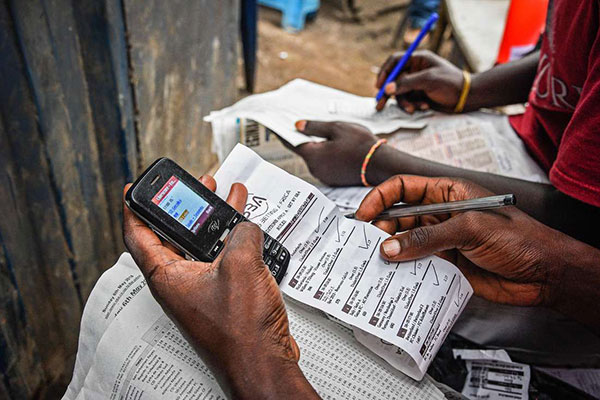
Consider the typical SMS betting workflow: a punter sends “BET EPL 1X 100” to shortcode 29090, receives instant confirmation, and gets results delivered automatically. No app crashes, no data bundle depletion, no smartphone battery anxiety. For many rural bettors, platforms offering comprehensive SMS services, including established operators like 22Bet login, have become essential tools for accessing international betting markets without the technological barriers that apps can present.

The Smartphone Surge: Apps Fight Back

Mobile betting apps didn’t concede rural Kenya without a fight. The smartphone penetration rate in rural areas jumped from 23% to 67% between 2022 and 2026, driven partly by Chinese manufacturers flooding the market with sub-10,000 shilling Android devices. Suddenly, the app versus SMS debate became less about capability and more about user experience.

Apps offer undeniable advantages: live streaming, in-play betting, detailed statistics, and crucially for slots enthusiasts, access to sophisticated games with megaways mechanics and bonus buy features that simply can’t be replicated through text messages. The visual appeal of spinning reels and cascading symbols creates an engagement level that “SPIN SLOT1 50” via SMS can never match.

Rural data costs, however, remain the app ecosystem’s Achilles heel. A typical betting app consumes 15-25MB per hour of active use, translating to roughly 200 shillings in data costs for a weekend of betting. Compare this to SMS betting’s fixed cost of 5 shillings per transaction, and the economic equation becomes stark.

Infrastructure Reality Check: When Technology Meets Geography

The infrastructure divide between SMS and app betting reveals itself most clearly during Kenya’s rainy seasons. When flooding disrupts 3G towers in Tana River County or sandstorms interfere with data signals in Garissa, SMS services continue operating on the more robust 2G network infrastructure.

Safaricom’s network coverage maps show that while 2G coverage reaches 96% of Kenya’s landmass, 4G coverage drops to 51% in rural areas. This gap explains why SMS betting maintains its stronghold despite the smartphone revolution. It’s not nostalgia driving adoption—it’s pragmatism.

The reliability factor extends beyond network coverage to device durability. Rural environments are harsh on electronics. Dust, heat, and occasional drops onto rocky ground favor the indestructible Nokia 3310 over the fragile smartphone screen. SMS betting aligns perfectly with this hardware reality.

The Economics of Rural Gambling: Shillings and Sense

Rural Kenya’s betting economics operate on razor-thin margins that urban operators often misunderstand. The average rural bettor stakes 47 shillings per transaction, compared to 156 shillings for urban app users. These smaller stakes make transaction costs critically important.

SMS betting’s flat-rate pricing model suits this demographic perfectly. Whether betting 20 shillings on a local football match or 200 shillings on the Premier League, the SMS cost remains constant. Apps, conversely, impose hidden costs through data consumption that can quickly exceed the stake amount for small bets.

“Rural bettors are incredibly cost-conscious,” notes James Kiprotich, a former betting operator executive who now consults on rural market penetration. “They calculate not just potential winnings, but the total cost of participation. SMS betting’s transparency in this regard has been its secret weapon.”

The payment integration also favors SMS systems. M-Pesa, Kenya’s dominant mobile money platform, processes SMS betting transactions seamlessly through USSD codes that work on any phone. App-based betting requires smartphone-specific M-Pesa apps or mobile banking applications that many rural users find intimidating.

Digital Literacy: The Invisible Barrier

Kenya’s rural digital literacy rates paint a complex picture that explains betting platform preferences. While 78% of rural adults can send and receive SMS messages, only 34% feel comfortable navigating smartphone applications beyond basic calling and texting functions.

This literacy gap isn’t about intelligence—it’s about exposure and training opportunities. Urban Kenya benefits from internet cafes, tech-savvy youth, and informal digital education networks. Rural areas lack these support systems, making SMS betting’s text-based simplicity more accessible than app interfaces designed for smartphone natives.

The generational divide is particularly pronounced. Rural bettors over 35 overwhelmingly prefer SMS betting (89%), while those under 25 split more evenly between platforms (54% apps, 46% SMS). This suggests a gradual shift toward app adoption, but the timeline extends over decades, not years.

When Slots Meet Safari: The Gaming Experience Divide

The gaming experience gap between SMS and app betting becomes most apparent in slot gaming, where visual elements drive engagement. Rural Kenya’s growing interest in online slots—up 187% since 2024—highlights this platform divide most clearly.

SMS slot gaming reduces sophisticated reel mechanics to basic text commands: “SPIN BUFFALO 50” might trigger a Buffalo-themed slot, but players receive only text results: “WIN 150 – 3 BUFFALOS.” The excitement of cascading reels, expanding wilds, and bonus animations disappears entirely.

App-based slots, meanwhile, deliver full audiovisual experiences that rival casino gaming. Megaways slots with their 117,649 ways to win, bonus buy features allowing instant access to free spins, and progressive jackpots create engagement levels that SMS simply cannot match. Yet in areas with unreliable connectivity, these sophisticated features become frustrations when apps crash mid-spin or fail to load bonus rounds.

The Hybrid Future: Convergence on the Horizon

Kenya’s rural betting future likely lies not in choosing between SMS and apps, but in hybrid solutions that leverage both technologies’ strengths. Progressive operators are developing “lite” apps that function offline, syncing when connectivity allows, while maintaining robust SMS backup systems.

The government’s ongoing rural electrification program, which aims to reach 95% coverage by 2028, will gradually eliminate one barrier to smartphone adoption. Similarly, Starlink’s satellite internet expansion into rural Kenya promises to democratize high-speed connectivity, potentially shifting the balance toward app-based betting.

However, cultural and economic factors suggest SMS betting will retain significant market share indefinitely. The simplicity, reliability, and cost-effectiveness that made SMS betting dominant in rural Kenya aren’t temporary advantages—they’re fundamental features that serve real user needs.

As Kenya’s rural gambling market continues evolving, the SMS versus app debate reveals deeper truths about technology adoption, digital inclusion, and the persistent urban-rural divide. The winner isn’t the most sophisticated technology—it’s the one that best serves users where they are, with what they have, at prices they can afford.